If you‘re navigating the ups and downs of perimenopause or menopause, you’re likely all too familiar with the sudden, suffocating warmth of a hot flash—and the emotional whiplash that can follow. You‘re not alone. Approximately 75% of women experience hot flashes during menopause, and for many, mood swings, anxiety, and irritability arrive just as relentlessly.
Hormone replacement therapy (HRT) is highly effective, but it’s not suitable for everyone due to individual health histories, contraindications, or personal preference. The good news? Acupuncture offers a safe, natural, and evidence-backed path to finding balance.
In this article, we‘ll explore how acupuncture can help tame hot flashes, calm mood swings, and restore your sense of well-being—naturally and without the side effects of medication.
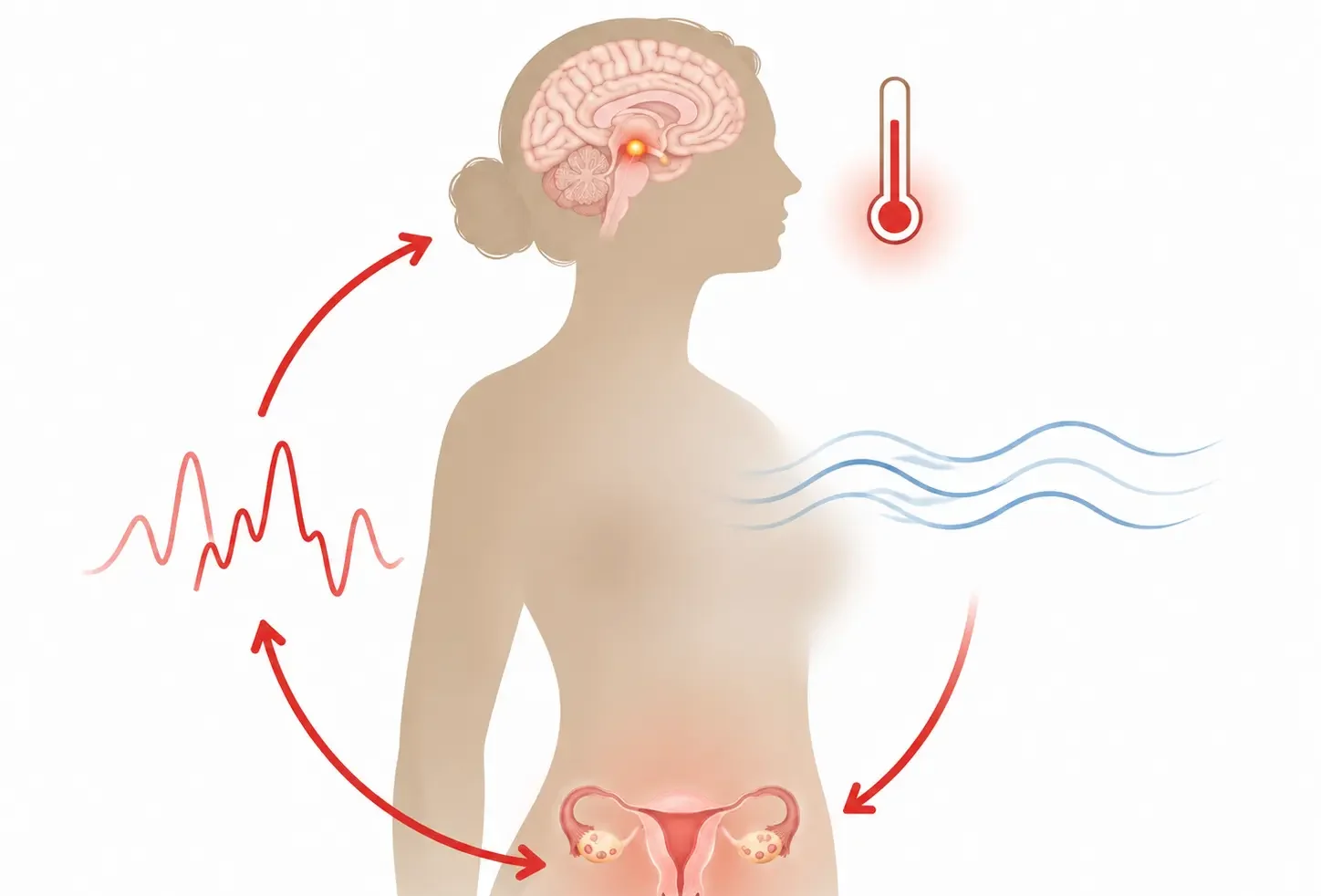
Menopause isn’t an illness—it‘s a natural transition. But the symptoms can feel anything but natural. As estrogen levels fluctuate and eventually decline, they disrupt key body systems in ways that directly affect your daily comfort and emotional state.
Hot flashes (vasomotor symptoms) occur when: Declining estrogen impacts the hypothalamus—your body’s internal thermostat. This narrows your thermoneutral zone, causing your body to perceive normal temperature changes as overheating, triggering sudden waves of heat, sweating, and rapid heartbeat.
Mood swings, anxiety, and irritability arise because: Estrogen influences serotonin, dopamine, and GABA—neurotransmitters that regulate mood. When estrogen levels drop, so does your brain‘s natural mood-stabilizing capacity.
This dual assault—physical and emotional—can make menopause feel overwhelming. But the same mechanism that connects hormones to brain function also explains why acupuncture works so effectively.
Acupuncture rebalances the body by influencing precisely the systems that menopause disrupts. From a Western medical perspective, acupuncture helps reduce hot flashes through three primary mechanisms:
1. Regulating the body’s thermostat. Needles inserted into specific acupoints influence the hypothalamus and autonomic nervous system—the very centers that control temperature regulation. Studies show acupuncture can improve heart rate variability (a marker of autonomic function) and help the body maintain a more stable internal temperature
2. Raising estradiol levels. Systematic reviews indicate that acupuncture can raise circulating estradiol levels, producing effects comparable to some hormone-based approaches—without synthetic hormones‘ systemic effects.
3. Reducing CGRP and inflammatory markers. Calcitonin gene-related peptide (CGRP) is elevated in postmenopausal women with hot flashes. Research shows successful acupuncture treatment significantly reduces urinary CGRP levels, suggesting a biochemical basis for symptom relief.
From a Traditional Chinese Medicine (TCM) perspective, menopause reflects a natural shift in Yin and Yang balance. When Yin no longer anchors Yang effectively, “empty heat” rises upward, creating hot flashes, night sweats, irritability, and insomnia. Acupuncture restores this balance by nourishing Yin and clearing false heat
The evidence for acupuncture in treating menopausal hot flashes has grown substantially.
A landmark AIM (Acupuncture in Menopause) study involving 209 perimenopausal and postmenopausal women found that acupuncture reduced vasomotor symptom frequency by 36.7% after six months—while the control group’s symptoms increased by 6.0%. Statistically significant improvement was observed after just three treatments, with maximal effects occurring after a median of eight treatments.
A 2025 clinical study published in Medical Acupuncture found that acupuncture significantly improved daily hot flashes, overall quality of life, and sexual health in perimenopausal women—with benefits lasting up to 12 months after treatment ended.
A network meta-analysis of 23 randomized controlled trials concluded that manual acupuncture had the highest probability of reducing both the frequency and severity of hot flashes, while warm acupuncture significantly improved menopause-specific quality of life.
A large umbrella systematic review concluded that acupuncture provides a moderate reduction in hot flash frequency and improvements in health-related quality of life.
The emotional challenges of menopause can be just as distressing as the physical ones. Depression affects approximately 20–40% of menopausal women, and anxiety rates are similarly elevated. Acupuncture addresses mood symptoms through multiple pathways:
1. Endorphin release. Acupuncture triggers the release of endorphins—the body‘s natural “feel-good” chemicals—creating a sense of calm and well-being during and after treatment.
2. Neurotransmitter regulation. Acupuncture influences serotonin, dopamine, and GABA levels, helping stabilize mood, reduce anxiety, and promote better sleep.
3. HPA axis modulation. Acupuncture helps normalize the hypothalamic-pituitary-adrenal (HPA) axis, which is often overactive in states of chronic stress and anxiety.
4. Sleep improvement. By calming the mind and promoting relaxation, acupuncture improves sleep quality—and better sleep directly translates to better mood.
The evidence for acupuncture’s mood-enhancing effects is equally compelling.
A meta-analysis of 49 randomized controlled trials found that acupuncture was effective for mood disorders in perimenopausal women (risk ratio = 0.13; 95% CI = 0.09–0.16). Acupuncture significantly improved Hamilton Depression Scale scores and both the Hamilton Anxiety Scale and Self-Rating Anxiety Scale scores.
A systematic review and network meta-analysis of 54 trials involving 4,406 participants found that acupuncture-related interventions showed superior efficacy to Western medicine in improving clinical response rates, depressive and anxiety symptoms, menopausal complaints, and hormone levels——providing strong evidence to support integrative treatment strategies.
Common acupoints for menopause-related mood concerns include: Yin Tang (calming), Shen Men (anxiety), Yintang (insomnia), Bai Hui (mental clarity), and points along the Pericardium meridian (emotional balance).
Research has identified a core set of acupoints commonly used for menopause-related symptoms. The most frequently studied points include:
LI4 (Hegu) – located between the thumb and index finger; regulates Qi and relieves hot flashes
SP6 (Sanyinjiao) – three yin intersection; nourishes Yin, regulates reproductive system
KI3 (Taixi) – Kidney 3; nourishes Kidney Yin, a key point for menopause
KI7 (Fuliu) – specifically indicated for hot flashes and sweating
CV4 (Guanyuan) – lower abdomen; vital point for reproductive health and Yin nourishment
BL23 (Shenshu) – lower back; strengthens Kidney Qi, addresses fatigue and hormonal balance
Additional points such as HT7, PC6, ST36, LR3, and KI6 are also commonly used depending on each patient‘s unique TCM diagnosis
Acupuncture is not a “one and done” treatment. The number of sessions depends on your symptoms, duration of menopause transition, and individual response.
For women seeking ongoing maintenance, a session every 2 to 4 weeks can help sustain symptom relief and prevent recurrence.
Acupuncture is extremely safe when performed by a licensed, trained practitioner. Side effects are rare and minimal—most commonly minor bruising or temporary soreness at needle sites.
Acupuncture is an especially attractive option if you:
Cannot take HRT due to breast cancer history, blood clots, or other contraindications.
Prefer to avoid potential side effects associated with hormone therapy.
Want a complementary approach alongside HRT or other treatments.
The World Health Organization (WHO) recognizes acupuncture as an effective non-pharmacological intervention for menopause symptoms, including hot flashes, sleep disturbances, and mood changes.
You don‘t have to suffer through hot flashes that interrupt your workday or mood swings that strain your relationships. Acupuncture offers a safe, natural, and evidence-backed path to finding balance during this transitional time.
👉 Ready to find natural relief?
Book an appointment
Call us at (647)893)-1224 to schedule a consultation today.
Disclaimer: This information is for educational purposes only and is not a substitute for professional medical advice. Always consult with your healthcare provider before starting any new treatment.